BOND Trial Aims to Improve Support for Families Facing Congenital Heart Disease
PR Newswire
CINCINNATI, July 14, 2026
Multicenter study, conducted through the Pediatric Heart Network — and co-led by Cincinnati Children's — will test new ways to strengthen parent well-being, bonding and infant development after diagnosis before birth or soon after delivery
CINCINNATI, July 14, 2026 /PRNewswire/ -- For many parents, the first weeks after learning their baby has a serious heart condition can be filled with fear, exhaustion and uncertainty.
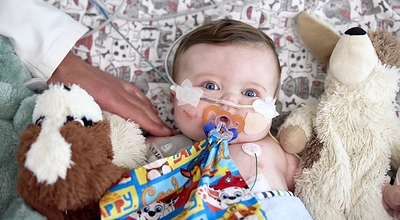
Congenital heart disease (CHD) affects about 40,000 babies in the United States each year. These conditions can include holes in the heart, missing or poorly formed heart valves, or more complex problems such as hypoplastic left heart syndrome.
Instead of cuddling their newborn, beginning breastfeeding, changing diapers and preparing to go home, parents of newborns with critical CHD often face a very different beginning. They find themselves in the high-tech world of cardiac intensive care, where they have to scrub in to visit their baby, who they see plugged into machines and monitors with tubes and cords everywhere.
They don't know whether their child will live to leave the hospital. And even though most do go home, families can't know what the journey ahead will be like.
To describe such an experience as stressful would be an epic understatement. However, few parents get the emotional and practical support that all parents need when their child is diagnosed with CHD. Now, a major clinical trial – set to begin this summer – seeks to change that.
The BOND trial is short for Building Optimal Strategies to Enhance Parent and Infant Wellbeing in Congenital Heart Disease. Scientists and clinicians across 12 core Pediatric Heart Network centers and five additional heart centers will recruit 350 families over the next three years. They will study the best ways to support parents and babies from diagnosis through the first year after birth.
The study is being conducted through the Pediatric Heart Network, a group of hospitals funded by the NHLBI to improve outcomes for children and families affected by heart disease. The BOND trial will explore two new approaches:
- A psychological support program called HeartGPS for parents who learn during pregnancy that their baby has CHD.
- And a clinical practice guideline to support infant breastfeeding during and following intensive care stays.
HeartGPS will be led by Nadine Kasparian, PhD, PMH-C, who founded the Heart and Mind Wellbeing Center at Cincinnati Children's in 2023.
The breastfeeding intervention will be led by William Mahle, MD, at the Children's Hospital of Atlanta.
"For too long, many families affected by congenital heart disease have had to be extraordinarily resilient within systems that were not always designed to support their emotional wellbeing," Kasparian says. "BOND is about changing that. We are asking, with scientific rigor and deep respect for families, how we can build care models that help parents feel supported, connected, and capable from the earliest moments of diagnosis."
Thriving with CHD vs surviving
This research is needed because care for babies with CHD has improved greatly. Thanks to better surgical and intensive care technologies, many newborns who once were not expected to survive CHD are getting opportunities to begin growing up.
But survival is only part of the story. Children with critical CHD can face ongoing challenges with feeding, growth, brain development, and mental health. Patients and parents navigating this journey often experience high levels of anxiety, depression, traumatic stress, and financial strain.
Today, heart centers vary widely in the psychological support they offer parents and in the resources available for parent-infant bonding, breastfeeding, and infant development. The BOND trial plans to generate more robust data about what interventions work, for whom, and when support should begin.
One key innovation of BOND is its "adaptive platform" structure. This means the platform can test several strategies within one larger project instead of studying one approach at a time and waiting years to begin the next. The aim is to build evidence that can grow over time as new interventions are added and less effective approaches are dropped or revised.
The results of the BOND trial could affect care well beyond the study sites. Findings could help shape clinical guidelines for prenatal counseling, mental health prevention and early intervention programs, and early developmental care. The findings may also help hospitals make the case for services that families often say they need but do not consistently receive.
Long-lasting impacts of stress during pregnancy
Many parents of children with CHD have expressed a need for mental health care during pregnancy. Previous studies have described profound and enduring psychological distress, disrupted bonding, and difficulties adjusting to parenthood. A common comment from parents: "I was numb. It was like I was on the sidelines watching somebody else's experience."
Meanwhile, as many as half of people with CHD are later diagnosed with anxiety or depression.
"The foundations of brain development begin before birth," Kasparian says. "The BOND trial gives us an opportunity to study this period and beyond with rigor and to test whether intervening earlier can change trajectories for children and their families. The right intervention early enough could have profound benefits for parent mental health, parent-infant bonding, and child developmental outcomes."
A key aim of the BOND trial will be to test the effects of HeartGPS, which stands for Guiding parents through emotions, Providing education and support, and Strengthening connections. This program envisions providing psychological intervention promptly after prenatal diagnosis of CHD and continuing throughout pregnancy and after baby is born. HeartGPS will be delivered via telemedicine by a trained group of medical psychologists at the Heart and Mind Wellbeing Center, which is where the PHN Perinatal Mental Health Core is based. Outcomes will be compared to families of children with CHD who received usual fetal cardiac care.
"With HeartGPS, we expect that mothers who receive psychological support beginning before birth will experience lower anxiety, depressive symptoms and traumatic stress. We also will examine whether the program strengthens parent-infant bonding, maternal stress physiology, and infant development. This is prevention science grounded in empathy and compassion," Kasparian says.
Can low breastfeeding rates for children with CHD be improved?
The other key aim of the BOND trial focuses on supporting breastfeeding, which often gets put to the side during periods of intensive medical care — only to discover difficulties later.
Research suggests that direct breastfeeding may help reduce medical complications for infants with CHD. Breastfeeding also may benefit mother-child bonding and enhance maternal mental health.
"Infant development is shaped by many different factors, with breastfeeding serving as one way to nurture this growth," Mahle says. "It transcends nutrition, fostering connection."
This aspect of the study will explore whether increasing breastfeeding rates impacts a variety of health measures for children with CHD.
What will participating families experience?
Participants will be evaluated at six key points beginning shortly after prenatal diagnosis and continuing until about 1 year after birth.
Research teams will collect information about each family's background and clinical care, as well as infant development and maternal health and wellbeing. Teams will collect samples, including blood, to help understand how the body responds to each intervention.
At the end of the study, participants will receive a summary of the overall study results, plus contact information for asking further questions.
"Survival is not the finish line. We want children with congenital heart disease and their families to have the best possible chance to thrive," Kasparian says.
 View original content to download multimedia:https://www.prnewswire.com/news-releases/bond-trial-aims-to-improve-support-for-families-facing-congenital-heart-disease-302825641.html
SOURCE Cincinnati Children's Hospital Medical Center

